an incomplete piece of writing for the sake of a fucking upload

January 23, 2018. 2:30 AM. for the first time in 9 years i consider giving up on trying to be an artist. my mom wouldn’t argue, she’d let me move back home. i could drop everything, the entire struggle, and watch my brothers grow up. i could freely be helpful for people who love me instead of grinding through a job at a company that barely cares about me, to scrape by and just barely manage to make rent. i have never thought these things before and i am haunted believing that all my aspirations are out of reach.


this website doesn’t exactly have a strong following, so i’m sure it went generally unnoticed that i haven’t written anything for the past year and a half. i’m trying to write something without subtle references to politics or metaphors. i just want to write something straightforward, didactic an banal.

2016 had ended on a note that felt good and hopeful, but 2017 soon cascaded into a nightmare of events that felt degrading, slowed my work and left me exhausted. 2018 doesn’t look like it is guaranteed to fix anything but there is a more substantial basis for hope that i can turn everything around.

the political turmoil of 2017 is very public and i don’t think i’d like to delve too much into that, so instead here is a list of events that have nothing to with you and everything to do with me.

in january i finished a residency with a group in my hometown area that had no idea how to properly work with a young artist. they were determined to revive the culture of the downtown. it was clear that this meant a revival through gentrification by the time i was done with them. this was disappointing. in exchange for use of their space i had offered half of the work i produced there with which to start an archive. by the end of my time there, they had forgotten that essential “with which to start an archive” and wanted to make sure they had the option to benefit financially from the work they were left with. perhaps the one benefit was that the work they were with was not marketable in the local area (very rural, with little connection to urban art centres and therefore urban taste) and that an archive was forced upon them in unsellable inventory. still, it leaves me unable to track the work and The September Collection is now likely scattered beyond reassembly. the experience with them left me destitute financially. i trusted them too much and let them control the marketing of an opening which was, in the end, very poorly handled. the turnout seemed to hinge almost entirely on the efforts of two individuals that i hope i have maintained a positive relationship with since these events.

left broke after that in a new city where i only spoke half the languages necessary for work was really rough. it meant i couldn’t rely on easy work behind a cash register or counter and had to look for work that only required i speak english. before i found work in the overnight shift of a call centre i did these things:

  • wrote motivational articles for $30/week under the pen name “Richard Prince”
  • offered classical portrait services
  • took commissions for (ugh) pet portraits
  • tried to make dirty art to profit from people’s perversion

the graveyard shift is now something i’ve promised myself i would never do again. i’ve never felt so endlessly tired.

a draft for babbling archives: chapter one – whistler. february


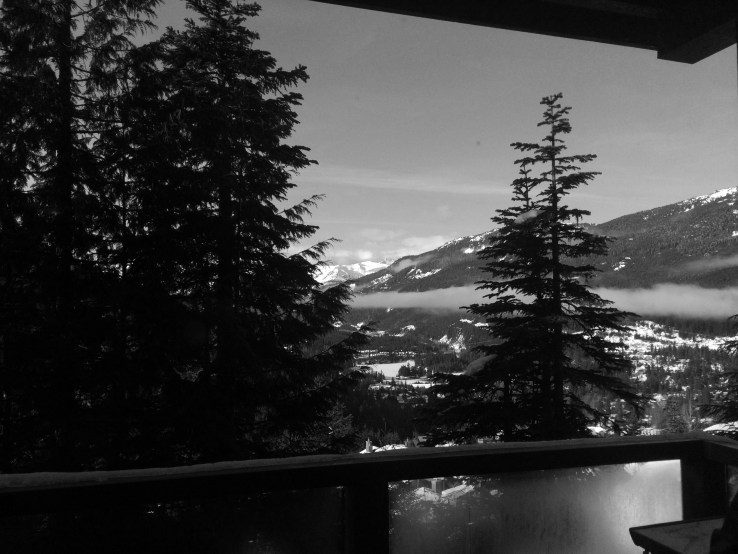
In February of the last year of my undergraduate program, my girlfriend took me up to her family’s condo. We spent the week there doing minimal schoolwork and enjoying a quiet time away from our hectic student lives in Vancouver. The glass buildings were replaced in the view by mountains, some of which Bronwyn could name. Sadly. I never managed to

01 Whistler.jpg

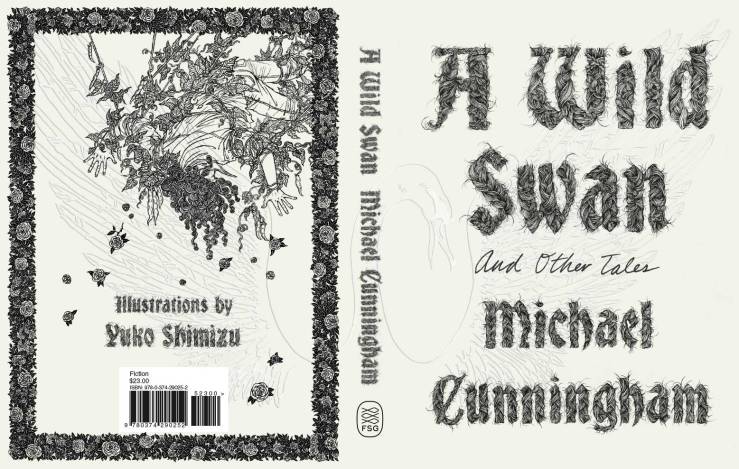
commit any of them to memory myself and got to know parts of Whistler in a way, but without ever really finding a proper sense of direction. At this point in time I was still fairly certain that she was not in favour of romantic gestures that relied on any kind of overwhelming surprise, though I should’ve known from her love of music festivals and dancing that I needed more to excite her than relying on quiet techniques like reading and writing. My dependence on those quiet things, I think, is perhaps the reason why there have been so many books exchanged between us. For Christmas she gave me a copy of A Wild Swan by Michael Cunningham, with illustrations by Yuko Shimizu. The book was in my backpack while we were in Whistler but I never pulled it out in fear that she would see the coffee stains on some of the pages. The frustrating thing was that I had not begun to read it before I had stained it. Eventually I told her I had it and she started to read it aloud to me. After she flipped through the pages a few times and deciding that it was best to read it in chronological order, she read Dis. Enchant, which serves as an introduction, and A Wild Swan: the first story. The writing was more profane than I had expected and full of black humour that is exactly what I should

01-a-wild-swan

have. I had assumed from the gentle and precise cover design by Shimizu that the book would be full of delicate and beautiful stories  with happy endings,,  maybe mixed with one or two of those stories intended to make you cry. The design had given off the impression to me of a fireside book; the sort of thing one reads while avoiding the cold.(Really, any book can be made that if it is read next to the fireplace, but just as some books are meant to be enjoyed in a state of mind far from sober, some beg to be read while avoiding frigid weather).

A Wild Swan concerns a royal family, as the fairy tales it mocks often do, wherein the stepmother queen of thirteen princes and one princess, turns the boys into swans. The princess learns that in order to do the magic that returns her brothers to a human form she must make them each a coat of nettles collected from a graveyard. Before she is caught she manages to make eleven full coats and one that is missing an arm. The swan-brother who receives this coat is turned back into human form, save for one arm that remains a swan wing. The story ends following the swan-armed prince into a desolate city life where he rehearses pickup lines he never uses in his head, lives in a dreary apartment and regularly goes to a bar surrounded by others afflicted by partially or entirely uncured curses. It takes an anachronistic turn in what is chronologically the resolution but feels more like falling action. It mentions televisions and other technologies that seem out of place in a story about a kingdom where they are still afraid of witches. No, the fireplace is not what this story was written for, but it is closely related to them, especially with Bronwyn’s voice. It’s also a change to the fireside that I would appreciate because a “calm” fireside seems a little outdated to me. That fireside seems part of bourgeois history of the early 20th century; the place of books like Dickens’ A Christmas Carol, which flaunts the Christmas epiphany as an end to the bad nature of man. Dickens is possibly the patron saint of Christmas stories, just as Thomas Nast is the near-secret patron saint of Santa Claus, Coca-Cola and fighting the mob with editorial cartoons. Both of them now lost as subjects and made entirely into capital objects in the world I live in; a world where the fireside story is cinematic nostalgia. That is, that it seems to emulate images of a comfortable position familiar to me from the screen that is easier to imagine in the third-person, which is a longing for something I will never really be able to experience because reading comfortably really means having a setting to forget so as not to be distracted.

Bronwyn finished A Wild Swan and marked off the page where the next story began and I told her that I wouldn’t pick it up and read it myself without her. She is unaware, I think, that when I think poetry, my mind jumps instantly to her. Before her there were poets I could associate with the people who had suggested I read them, and for a while it was only T. S. Eliot that had me thinking of her, but I think it was because I read a poem that Bronwyn had written before we knew each other well, that when I think of poetry I think of her. That isn’t to say that her body translates before me into poetic metaphors, it is to say that they are synonymous and not whole as concepts without each other. I am all too aware that one of them is older than both of us, as old as democracy and philosophy, but I have not known it that long and know Bronwyn better than I will ever know poetry, so fundamentally it is hers as I see it.

At the time, in Whistler, I was listening to the novelist Lawrence Hill talk on blood in his set of lectures for the CBC Massey Lecture Series. Though I was thinking much more about the series Adam Gopnik had broadcast in 2011. Gopnik, an essayist, had talked about winter in his lecture series. Specifically, he talked about the modern winter and he argued that it was born out of the ability to observe winter painlessly. Suddenly, winter, after the invention of windows that kept out the cold, and heating that kept the home warm, a painter could appreciate the sublime white and not merely survive it. Gopnik began lecturing about a Romantic Winter, in which the season was to be enjoyed for the first time in history. The winter described by the poet William Cowper as “the king of intimate delights.” He goes on in his four lectures to describe winter as Radical, Recuperative and Recreational, ending with an almost somber lecture titled Remembering Winter. The most important of that series to me as I was listening to them was Radical Winter which begins with a reminder that the true setting of Mary Shelley’s Frankenstein is the Canadian Arctic and that almost the entirety of the rest of the story is a flashback, or at least framed by Dr. Frankenstein as he recounts the events that led him to the north. Most of the lecture describes expeditions to the North and South Poles, emphasizing their futility and the delusion that there is something to find. It’s a foolishness chasing fantasy that is the stuff of legends. A ship goes out year after year to find the ship that had preceded it, knowing almost full well that they were to be lost as well. “Paradise is an island, but so is hell,” writes, Judith Schalansky (“Beautiful,” responded L). Really though, they are both places of colonial dreaming that rarely amount to anything more than the unnecessary death of travellers or those living in the places they have travelled to. A North Pole at the time was only worth travelling to as a storytelling experience and not yet a proper geographical study. To be fair, the crews that believed themselves to be brave didn’t know the pointless nature of their heroics and I wonder if it relates to a word Gopnik introduces in Remembering Winter: vernalization. It’s a botanical term that describes the process of seeds that can only thrive in spring if they have gone through the severity of winter. The Israelites can only live in Paradise if they spend forty years wandering the desert; Scrooge can only be generous once he has been frightened into that mindset; silence can only be welcomed after overwhelming noise, just as noise can only be welcome after overwhelming silence. Without a season of overwhelming noise or silence, they are merely noise and silence; they leave love irrelevant and life monotonous.

It was Thursday when we headed back to our lives in Vancouver. In Whistler we had spent time in the Village, gone to see a film (Pride and Prejudice and Zombies), cooked for each other (she was much better at it than I), and she thought about going skiing but never did. We looked at the stars on a walk and she named a few constellations, not knowing many but still more than me. Not much of what we did there together was new but it happened somewhere different for us and we spent more hours together in a row than we had previously. If we are offered any sort of poetic preludes to the sort of things that hurt us, the connection this had to the event that had me in tears two weeks later is unclear and all I know is that on the drive home I thought Bronwyn might be sick of the noise I can produce but was relieved when she stayed a few more hours at my home and we silently held each other in my bed during that time. We had agreed on the ride home to return to the roads leading to Whistler which are full of landscapes we thought could be worth drawing. Landscapes are something that have never held my attention, I find them tedious to examine and uninteresting. Maybe it’s because I lack the knowledge to speak about them. Maybe it’s because when I was younger than twelve I took a ride on a train with my grandma who told me that when she was young, she never understood why adults would tell her to look out the window at the landscape because it was so boring. As I grew older, she said, I began to see things I had not appreciated and learned to see a new kind of beauty in it. My grandma had also told me around the same time that because I could draw I could probably have a very successful career as a dentist. I don’t think she was aware that the job has the highest suicide rates of any profession when she gave me that advice. Maybe for that reason I could classify dentistry and landscapes in the same category: things I have been told to like but choose not to out of insolence. I will admit to enjoying drawing the landscape even if I rarely go back to

01 whist.jpg

look at them. It provides a challenge to my techniques that have almost all been honed to representing figures. Painting the landscape has always been something that I reduce to a simple green and blue, or blue and white if it is winter. Blue and blue is a seascape, and I can’t help but wonder if the Atlantic Ocean looks different when looked at from the different parts of its coast, or if it all just blends into the same image when it is separated from the land. Maybe it is all in the eye of the beholder: mountains are only really the mountains of Whistler and British Colombia and I designate them amateur terms like the smaller ones and the bigger ones; the ones where I love and the ones where I have been loved; the small number I’ve been to, the ones I might one day go to, and the majority that I will never be on, and will rarely think of.


sentiment and the lyric-poem

the lyrics are easily read in two conditions, and, infrequently for me, but still from a third. in the first and second perspective it is easy to find a position to identify with. with others, i have had trouble really placing myself in the first or second and must concede to the third perspective.

all of the positions depend on memory, obviously; this is art and its amenable nature is what makes it an object of sentiment regardless of how much sentiment is carried through the voice and music to me. however the memories required to filter the sediment for precious moments are memories that depend on a relationship with another subject-object. though some songs are portrayals of loneliness, they are a loneliness from lost love and they require a specific figure to fill the gap. when the lyrics are read and looked at from the third person i believe it is because of the inability to find an emotionally adequate memory of a relation to another person to match the words, phonetic structures, or rhythms within the poetry.

positions of the reader get tangled up with one another and i believe that is vital to locating the sentiment in Taylor Swift’s lyric-poems, or the lack thereof. there are songs that sometimes are being sung at me; they put me in the second perspective and each “you” is a descriptor of the place i am standing from as the “i” removes the voice of Swift and is replaced by a figure from memory. the second perspective relies on me having had related to a person in the way that the lyrics feel like they are being sung or spoken to me, and my parts of conversation fitting somewhere in the spaces between words and in the breaths i take when i read it aloud. in the second perspective it’s often the character of the ex-boyfriend that is assumed here, which is easy because that’s who is often being addressed in the first place by the writer. it’s not always a good feeling to be there and it’s more common to find instances where i feel guilty for something i may not have done; substituting sins that may not even be memorable to the sinned-against but have lingered in my memory for longer than they should, which is an assurance that guilt really has no standards for its own tastes and its longevity can be fairly arbitrary.

in the first-person i am put in the even stranger position of feeling like what is recounted to me comes from my own experience. perhaps wrongfully but likely within the intents of the writer in any case, I take the place of Taylor Swift and instead of being addressed by a figure, my position becomes one where i say words that feel like my own even though they are far too coordinated to be held in an improvised and ordinary conversation with the memory-figure. the conversation is fragmented. i rarely go off on tirades and sometimes these lyrics that feel like they’re in the first person are fantastical and stand in for other conversations that i wish had gone another way. it’s a wish-fulfillment when the words feel like ones i didn’t say in any form. in both rephrased recounting and fantasy-edits of memory it is a flipped position from the former perspective entirely: in this case i am the “i” in the poem. again, i have a place in it and the sentiment seems to be in the mediation between internal memories and the amenable object. this is in common with the former perspective and would be content to call that the location of the sentiment if it weren’t for the change that happens in the third. the third person becomes complicated because neither of the positions are ones i can occupy. there is no place where i feel like i am addressed or am addressing another. poem-lyrics like Shake It Off are like that: there is the possibility for an emotional connection but it isn’t made; it still feels away from me and the characters are either Swift alone or a pair that do not match memory. that is not to say that they lack sentiment though. they do not exist in a space of an empathetic feeling but a sympathetic one. that is when they do lack sentiment to me and the reading is as that of the student who may have enjoyed Salinger and Hemingway but is instead too engrossed in analysis to find sentiment. the student can admire structural precision. perhaps that is a sentiment all in its own, but i am thinking here of romanticized sentiments. the third person provides a platform for observation on two quasi-fictional figures who can be sympathized with and their story, though un-relatable to me, can be beautiful enough to stir an emotion like admiration or pity.

but where does the sentiment emerge from all this? the sentiment is not any of the above which is broken down into:

  • the text
  • my self
  • the imagined figures
  • the imagined figure’s relationship to myself
  • the imagined figures’ relationship to myself
  • the way that relationship makes me feel
  • memory, which is to say the customized and false past
  • my relationship with that memory, or memories compiled

easily, the above could be divided into a venn diagram that isolates internal factors, external factors, and internalized external factors. this leaves a formulaic place to put the sentiment: the externalized internal. a new question arises to replace where is the sentiment in Taylor Swift’s lyrics, and is replaced with is a tear a sentiment? a sentiment is not an emotion but that which is produced from an emotion. sentiment guides decisions and is related to the decision but is not entirely the decision itself. this means it is the internal feeling made external by decision. we do not choose to cry though. we cry when we are overwhelmed by emotion but the tear is not the feeling it is a reaction to it and a reaction is not a decision, it is instinct. if a decision is guided by feeling though, and changed from its natural state, which is the place of survival and self-advancement, because of a feeling that is not chosen, but imposed or found, it is a sentiment, or is where the sentiment is held. a tear is not a sentiment unless you keep it and use it for something that is not crying. the lyrics themselves therefore are the sentiment, the text though and not the work.

a follow-up for Damian Moppett

when i wrote I Took a Rorschach Test and Made an Enemy for Damian Moppet in my third year humanities class with him, i left an endnote for him mentioning where the essay would have continued given more time and the vocabulary i have now. with more time i would have mentioned conflict and gone on to continue describing its differences from mediation. it would have cited the fact that in conflict there are usually two parts of a hierarchy in a struggle for power or continued power. mediation, at least looked at properly, involves assuming there are no absolute hierarchies because parts of the mediation are united in system and not only associated by struggle between one another. this is isn’t to say that hierarchies don’t exist. hierarchies are a constant in societal structures; currently of course, with white, straight males at the top of this oppressive food chain in north america. it is easy to say that being able to pass as fitting that description has been incredibly favourable to me throughout life. i have not known what it means to try and escape the kind of oppression that Paulo Friere describes in Pedagogy of the Oppressed where he describes oppression as the limiting of a person by another person that makes it impossible for another person to become incapable of being fully human. he is writing from an understanding of a position that i can’t understand. that isn’t to say i’m not in a place of any societal disadvantage. often going undiscussed, or brushed off quickly, is the plight of the introvert. Susan Cain outlines the bias for extroversion in an extensively researched book aptly titled Quiet: The Power of Introverts in a World that Can’t Stop Talking. It covers everything from small conversation (fuck small-talk) to speaking capabilities (fuck “face-to-face” as superior and “writing” as cowardly) to office layouts (fuck open floor plans) to educational structures (fuck group projects), laying out very clearly that it isn’t beneficial to favour either extroverts or introverts and that mediation between the two produces a better functioning society than the result of leaving one incredibly prevalent nearly everywhere. i vehemently use methods to do things in ways that are quieter now, and sometimes take the time to flip a balance. i’ll ask a critique to take place entirely in writing or a friend and i will write letters as we go about our day instead of stopping to talk. in the middle of what we’re doing; something that seems to lack intimacy but promotes some closer relations than i have ever in encountered in such a short period of time. this has led to a lot of writing, which is not uncommon, and i am certainly doing nothing new with the formatting techniques that i use, what’s new to me is the vocabulary i can use to express these techniques that can be used to describe the writing i use which has a didactic relationship to my art. the predominantly lower case writing where most capital letters are names of others who capitalize their own names is taking the writing structure of parataxis, which is championed by Gertrude Stein, and giving it more qualities and prevalence than only within the structure of sentences. writing in the subordinate is too classic for my tastes, though like extroverts it has its place. i like the way that parataxis attempts to shrink hierarchies down in varying ways. Stein’s work brilliantly made a point to stress composition as she went through her composition. minimal punctuation does not make her work unreadable and really is something that a person becomes accustomed to after sticking with it. Lynne Tillman took another impressive approach in What Would Lynne Tillman Do? where she takes her sentences and writes them in an order where there is nearly no connection from sentence to sentence. they are not without order, but the only one quickly apparent is the order that they come in. violence is not a good word for how language is treated when it was malleable to begin with. i learned how to stop Microsoft Word from capitalizing i. acknowledging bell hooks would be wrong here, the credit should really go to Magnolia Paulker.


I Took a Rorschach Test and Made an Enemy:

Or, Why I give Gifts

salguero kiernan

HUMN 311

Damian Moppett

April 13, 2014


When it comes to conversations about a field of knowledge there always seems to be prevalent stereotypes that are sometimes difficult to move someone past in conversation without sounding like a know-it-all elitist. With art I’ve found it to be the painter or the romanticized starving artist (“What are you going to do after you graduate?” “Perhaps get a Master’s degree. Be an artist, definitely.” “Wow, that’s so great” they say with a condescending smirk believing that I don’t understand the ways of the world and that someday soon I will not be able to dream as I do. Fuck your fucking sentiments about shit you don’t even know.). In comic books, it’s the predisposition that all the stories (especially those about Superman) are a dumbed down obvious symbolism for the conflict between good and evil written and presented in a childish format. It’s a fading misconception as the comics industry expands onto the screen and attracts more readers to the books themselves, but it remains strong as an afterimage of the allegorical tales that dominated early and wartime comics.

In the latest issue of Batman, The Joker has returned for the second time since I started school at Emily Carr. When he appeared almost three years ago it was as a servant to his “Bat-King” whom he felt had been softened by the allies he surrounded himself with. His mayhem was a love letter that he hoped would help Batman shave off his family and return to his completely hardened ways. The current story is the opposite. Rejected, the Joker’s current attack is all hate; it is comedy turned tragedy and altogether poetic (Snyder). Scott Snyder’s work on the series is quite brilliant and connections can be drawn everywhere to make lovely connections. But these connections are planned. The writer sets up images and words so that the reader can make sense of the chaos because the chaos actually makes sense. The real world does not afford the individual this luxury. Instead we take the incomprehensible and shape it to our own needs to see the world as a story that will follow narrative structures and let us become poetic beings.

Wiliam Feller writes “To the untrained eye, randomness appears as regularity or tendency to cluster” (Pinker 203). There are ways of describing this mistake. There is The Gambler’s Fallacy, which helps people lose large fortunes to the idea that after a large run of similar outcomes in a game of chance, the next is about to go the other way. Coin flips with true patterns (like TTHHTHTTTT) are more likely to make people believe they are false because long runs contradict our knowledge of a 50/50 probability. There is The Birthday Paradox where there is a “better than even” chance that two people share the same birthday in a room of 23 people. At 57 people, the chances reach 99%. Though there are 366 days on which to have a birthday, it seems people would like to believe they are scattered evenly throughout the year even though that would be the case only if there was a force separating them (Pinker 204).

The following example is perhaps the most illustrative of making beauty from random chaos. Glowing ringworms on a cave wall can look like stars but not constellations. This is because they will eat anything within an inch radius of themselves and that sets up a block for true random dispersion to occur (Pinker 204). Stars, which are random, are something that we can easily build entire stories and mythologies around by taking their incomprehensible randomness and making them into constellations.

Steven Pinker is using this specifically to illustrate the patternless wars throughout history. Often these wars are attributed to grand narratives of political ideology, but really they are just chance events following a Poisson process that are triggered based on varying probabilities (that could be the result of large historical dramas) that could have been avoided if single individuals just happened to not be born. Arguably, this makes Gavrilo Princip the most important figure of the 20th century and that  without Adolf Hitler there is no World War II because “there was only one man in Europe who wanted war” (Pinker 208).

This drive to make something from nothing is fascinating, but I don’t believe it is what art does. Perhaps the art-making process is this; it is easy to conceive the artistic process as a means of interpreting randomness with the control of the artist. Now this puts the viewer into a position to interpret the art based on the world behind them. There is no shared meaning between the two unless it is spelled out by a badly written didactic panel or unless the coefficient knows the artist and they share meaning between one another. The interpretation game becomes a means of taking sides. If I were to continue talking about art, I would turn here to a hypothetical debate about whether it’s more important what the action painters produced or if the system that produced them should take a more important position in analysis. Instead, I direct my attention towards the bible.

Elizabeth Anderson describes the bible as a “Rorschach test” after laying out several passages that make it a moral code clusterfuck. God permits both heinous and unthinkable crimes while promoting peace and good will in other sections of the book. Anderson argues that because of these contradictory positions it is impossible to follow the book’s guides without choosing one of various possible moral positions (Anderson 341). This has more to do with how an interpretation and stripping it of the “objective” standpoint in which an attempt to govern behaviour of others is the focus, I ask what can be done with the story on a personal level instead? Joan Didion might say that we use the story to cope and Grant Morrison might say that we use stories to thrive.

Didion opens The White Album with her incredibly quotable sentence: “We tell ourselves stories in order to live” (Didion 11). The first paragraph outlines essentially organizing tragedy into narratives that can comfort us, “We look for the sermon in the suicide, for the social or moral lesson in the murder of five. We interpret what we see, select the most workable of the multiple choices” (Didion 11). This is a means of coping; the world is not friendly so you make it friendly in your head. This comes from compartmentalizing what is real. It almost seems like to great of a leap to compare and contrast Didion’s journalistic work to the comic book fiction I am about to describe by Grant Morrison, who primarily writes comics, and believes that we use stories in order to thrive.

“We live in the stories we tell ourselves. In a secular, scientific rational culture lacking in any convincing spiritual leadership, superhero stories speak loudly and boldly to our greatest fears deepest longings, and highest aspirations” (Morrison xvii). These stories, he argues, have no less relationship to human existence because they are about gods that are greater than us. They face the same problems as us, but on cosmically grander scale and with much larger consequences to their mistakes. Breaking down his story All-Star Superman, he describes “stories of a world where intimate human dramas of love, jealousy, or grief enacted upon a planetary scale by characters whose decision could shake worlds” (Morrison 410). Perhaps he sums up the conflict of using fiction to thrive best in his comparison between Superman and the atomic bomb: “Before it was a Bomb, the Bomb was an Idea. Superman, however, was a Faster, Stronger, Better Idea” (Morrison xv).

Again, comparing Morrison and Didion seems strange, but I believe what they are both talking about is real experience made into stories, even if one is talking about fiction as repurposed reality and the other is talking of realities made of repurposed fiction. This, to me, satisfies quite a bit of thinking when it comes to standard fictions and non-fictions but still leaves me a little uneasy when it comes to the genre of testimony and the first-person story.

Robert Eaglestone lays out an investigation on the relationship between Holocaust testimony and the problems of identification that come with reading it in the first chapter of his book The Holocaust and the Postmodern which I first encountered as a far superior philosophy lesson to the high school’s I was taking alongside reading it. He describes a situation where “The events of the Holocaust are often described as incomprehensible, as ungraspable to those who did not experience them” (Eaglestone 16) and quotes Charlotte Delbo on the topic of survivors saying “All of those I met since I came back do not exist… [sic] They belong to another universe and nothing will allow them to rejoin ours” (Eaglestone 17). Elie Wiesel went far enough to say that that there is a “break between language and reference itself” and that “We speak in code, we survivors, and this code cannot be broken, cannot be deciphered, not by you no matter how hard you try” (Eaglestone 17). The problem that testimony opens is that though we are told with authority that they incomprehensible “However, the representations seem to demand us to do exactly that, to comprehend” (Eaglestone 19). Comprehending happens through identifying with it, but that has its own ethical dilemmas that seem apparent in trying to put yourself in the shoes of the survivor during the event of their trauma that is resolved through genre. The genre of testimony demands that you attempt to identify. This identification now can actually be used for the morally good in the building of empathy.

A small and quick example of this can be made apparent in the effect that first-person fiction from the perspective of the female written in the mid 1700’s has been theorized to have had. There were three notable novels: Pamela (1740) and Clarissa (1748) by Samuel Richardson and Rousseau’s Julie, or the New Heloise (1761); “Grown men burst into tears while experiencing the forbidden loves, intolerable arranged marriages, and cruel twists of fate in the lives of undistinguished women (including servants) with whom they had nothing in common” (Pinker 176). Pinker goes on to describe Lynn Hunt’s theory of a causal chain: “reading epistolary novels about characters unlike oneself exercises the ability to put oneself in the other people’s shoes, which turns one against cruel punishments and other abuses of human rights” (Pinker 176). Pinker highlights the possibility of this being wrong, but does show that there is a trend in the topics popular novels cover and the way they “raised public awareness of people who might otherwise have been ignored” (Pinker 177).

With the conclusions of these writers, scientists and the academically interested, I have found myself in a position of accountability for this understanding in the art I make. I must consider how I will build, or how I have built constellations in my life and I must choose my code, both moral and lingual. I must invent my enemies and consider how I care for “truth” and “beauty.” To start with this, I will to turn once more to Batman and The Joker.

“The pair shared the perfect symmetry of Jesus and the Devil, Holmes and Moriarty, Tom and Jerry” (Morrison 24). Conflict, in my opinion, is at the very heart of making a narrative complelling. It is the negotiation between opposing forces that provides the possibility for thesis to meet anti-thesis and to produce synthesis which becomes the thesis from which must emerge a new anti-thesis. But why create an enemy if the narrative is being made up to cope or thrive anyways? Why create a conflict if it is only there for personal negotiation? Umberto Eco argues that “Having an enemy is important not only to define our identity but also to provide us with an obstacle against which to measure our system of values and, in seeking to overcome it, to demonstrate our own worth” (Eco 2). Going on later to say “the epitome of difference is the foreigner” and pits Romans against the barbarians (Eco 3) which serves as one of his concrete examples of the more abstract statement: “We can recognize ourselves only in the presence of an Other” (Eco 21). This is important; this is not only identifying identity but also how an individual can place themselves in the world to any degree of comfort. This means that picking a side of the bible’s Rorschach test is not just picking a moral compass it is also picking an enemy and an opposing force.

There is one last thing I would like to cover before the describing the conclusions I have drawn from all this, and it really is taking a few steps back to the topic of interpretation and the Rorschach test mentioned by Anderson. Anderson’s example of the bible and pulling rules is a fine example of having a ground to quote without a clear ability to misinterpret. The Ten Commandments, for example, are rules that lay themselves clearly and quoting these does not change their meaning much. The slippery notion of quoting, and ultimately bending another’s words to a personally constructed narrative, is better shown in the controversy surrounding Keats’ poem Ode to a Grecian Urn where there is an incredible dispute between whether it is the poet or urn who proclaims the aphoristic ending: “Beauty is truth, truth beauty – that is all/ Ye know on earth, and all ye need to know.” The dispute not only clinging to who has said what, but how much the quotation changes depending on where the quotation marks are placed (Gerber 27). The debate itself here is irrelevant, but the catchy phrase is used and attributed to Keats (much at the chagrin of some of his admirers) in a list of media headlines and the like that are listed as examples by Marjorie Gerber, always in the vein that there is no cynicism in the statement and no possibility that Keats did not mean the sentiment in the fashion of which it can appear (Gerber 29). What this means is that not only do we fashion Others out of a need to create an opposite with which to identify, we also will take the more ambiguous (and sometimes not even that) books, statements, artworks and events to satisfy our own identity’s need to be reinforced in a greater number of citeable external sources. A colder winter could mean that global warming is a problem; it can also be twisted to say that it is a sign that there is nothing to worry about.

All that exposition is the major freights of a train of thought that has been pushing me along since art became the most serious thing I produce. It is what has made me choose to work the way I do now and decide what disciplines I want to claim as my own. The method I have adopted recently has put “the public” as the Other to my work, which means I deal with its anti-thesis, “the private.” To expand I do not enjoy “public ambiguous meaning” and have chosen the discipline of “private intimate meaning.” This is why I give gifts. The OED provides two wonderful definitions for the noun, “gift:”

  1. “Giving”
  2. “The thing given.”

And one other fact that stood out to me: that it can be translated from German to mean “poison” (Oxford).

I’d also to add three criteria of a gift described by a friend and former instructor of mine:

  1. A gift is something you get from someone that reveals that they know who you are and demonstrate that they still like you.
  2. A gift is something you get, from someone, that you didn’t know you needed.
  3. A gift is something you get from someone that gives you all of them.

The email I have saved which highlights these criteria has a lovely comment afterword, reading,

“Of course the same is required of you.”

What I appreciate about these things is that provides my ground for building a code between myself and others and provides a moral standpoint which places the gift in a place of sentimental reinforcement of a positive relationship that promotes trust and intimacy. From the ambiguity of the Oxford dictionary definitions, a very specific side to a “thing given” is provided and it is the side that stands Other to poison (which only needs one more ‘s’ to be ‘Poisson,’ who’s process, you may recall, is a description of chaotic randomness). I have organized my discipline to be the expression of a relationship which is not the business of a wider community. My work is no longer designed to be hung on any gallery wall and, in fact, I took the position a few months ago that I would never display my work in a gallery again and would take as many steps as I can when giving a gift to ensure that the gift which is my art cannot be used by myself as a means of self-promotion as an artist. I make paintings for money, but they are not my art, they are a means to a fiscal end.

As a closing note, I do not see artists working for the Public a shameful thing. The “enemy” I have set for myself is the selfish collector, the ruthless business of the artworld, the need to legitimize art by how much cash it can make and the delusion of grand narratives in every artwork. Early this semester a classmate said something after my introduction in your class, Damian, that was something along the lines of “Yeah, I get what he means, I give a lot of gifts too. Like, to collectors that I like that I’ve found or come into my studio.” Unless they were using the word “collector” in a more open way than I ever would, that is my enemy; an artist who has succumbed to the system in a way that they pollute the intimate gift with motives of self-promotion. Their work, as I’ve seen it, was always shallow references to the past 100 years, void of any decent thought and working only as what appears to be a homage to making lots of money. That is my enemy.


Works Cited

Anderson, Elizabeth. “If God is Dead, Is Everything Permitted?” The Portable Atheist. Ed. Christopher Hitchens. Philadelphia: Da Capo, pp 333-348. 2007. Print.

Eaglestone, Robert. The Holocaust and the Postmodern. New York: Oxford University Press, 2008. Print.

Eco, Umberto. “Inventing the Enemy.” Inventing the Enemy. New York: Houghton Mifflin Harcourt Publishing Company, pp 1 – 21. 2011. Print.

Gerber, Marjorie. “ “ ” (Quotation Marks)” Quotation Marks. New York: Routledge, pp 7- 32. 2003. Print.

Morrison, Grant. Supergods. New York: Spiegel & Grau, 2011. Print.

Pinker, Stephen. The Better Angels of our Nature: Why Violence Has Declined. New York: Penguin Group, 2011. Print.

Snyder, Scott and Greg Capullo. Batman, Vol 3: Death of the Family. New York: DC Comics, 2013. Print.


A Small After-Note:

For the sake of not handing this in any later than I am, I would have liked to expand on conflict and oppression while discussing Paulo Freire and also my place as an introvert while discussing Quiet, by Susan Cain. It would have also led to describe why I don’t capitalize and why I changed my name (with reference to bell hooks) and the follow-up of Microsoft Word being my enemy as it corrects “i” into “I” and how exhausting it would be to change them all and how avoiding that exhaustion could one day be my undoing.


Have a lovely summer.


a bitter dwelling and palpable anxiety : Blue Nights, by Joan Didion

usually when i read works by Joan Didion, i read her as involved but unexcited, and bitter about the state of a great deal, instead of the anxieties that are often used to describe her writing. maybe i’d been misreading it all and wasn’t able to see it anywhere except where she was overt about it. Blue Nights was littered with that anxiety. it was palpable and it hurt to read sometimes. the prevalent of the writing is the mourning of her daughter’s death, Quintana Roo. the dominant subject is Didion herslef. the only constants throughout the book are the events, and Didion; events are presented anachronistically and there are a great deal of divergences that lead to Didion writing about aging and her own ailments; even though she writes about here daughter, it is to talk about her current condition, especially in the way it has changed since the past. there is a looming sadness in the writing about Quintana as she brings up the memories that are distinct and she believes define her relationship to her daughter. nearly all of those memories emphasize the fears she retrospectively has about the quality of her parenting as she plays detective with the small pieces of Quintana’s legacy. each memory of her daughter holds one or two focal junctures that could be made of a sentence someone says or a revelation Didion has, that comes up repetitively throughout the rest of the book. the writing performs entirely against a sentiment (one of the repeated phrases) by her daughter: “when someone dies, don’t dwell on it.” it winds up being exactly what Didion does, dwelling.

she has compared herself to a musician before, or has put her writing along side metaphors of composing music. “Grammar is a piano I play by ear,” she has said. Didion returns to the metaphor in a chapter, which could also be called a verse when it comes to her writing, where she describes the writing technique she could use when she was younger: there was a general stroke of words describing the intended action of the sentence and afterwards she would fill in the blank pieces of her perfect, algorithm-like, phrases. i am glad she makes this comparison because i have an easier time talking about her work when i talk about it using musical terms. when i say she uses a phrase i am comparing her string of words to a string of notes, and vice versa. Blue Nights, it is easy to say, makes active use of leitmotif.

throughout her essays, she constantly manages to keep her own writing and opinion’s character by mimicking the character and opinions of the people she encounters. she does that in Blue Nights with the same bitterness that i am used to loving, but the palpable anxiety is clearest when she applies this technique to herself and it amounts to a tautological leitmotif. the repeated phrases amount to the emphasis of traumas and the reminders of time and health that will never be returned. she tries to say that “when we talk about mortality we are talking about our children” but never seems to admit than when she is talking about her child she is talking about her own mortality. things repeat and go on and she dwells and in the end of the book there is no real closure because, in the writing, the mourning which can come to a close is made secondary to the anxieties that have lasted a lifetime and show no signs of changing into anything else and have only grown as the body becomes more frail. when her own body turns on her and she realizes how mortal she has become, so too does the bitter repetition she managed to play by ear with and against the subjects of her work. Didion writes about the way that writing does not come easily to her anymore. she writes about the ailments that are new. there is a passage where she describes not noticing her frailties until they were so prevalent in her life. she writes about the ailments rooted in her youth that are coming back to haunt her now. she does not write about regrets, only worries. she writes as someone who has had time to be a journalist, lover, novelist, mother, playwright , young and old.

Italo Calvino wrote that “You reach a moment in life when, among the people you have known, the dead outnumber the living.” Blue Nights, as i understood it, is what happened when Didion reached that moment.

metaphor running in expanding circles

Shakespeare is read in school more than he is watched and performed (in the average high school education anyway; obviously in a theatre program there is more performance of it). Through my limited experiences with others that have been put through similar educational structures it is a nearly useless way to work, only nearly because it usually makes a difference seeing Shakespeare performed after having read it. When I was in Grade Eleven, my drama teacher brought in some members of a Stratford (Ontario) acting company to talk about performing Shakespeare. The type of acting they described was one that almost matched the way actors would perform in silent movies. There is a base assumption that the audience does not understand the words and depends on nearly over-the-top melodrama to bring clarity to the plot. This is tragic because the text is so witty and full of the things that truly make the work brilliant but lacks the action that makes the performance so thrilling. It’s a vicious cycle as the text lacks the action and the action can lack the wit. The only educational model I have experienced that teaches Shakespeare effectively is the process of performing a play. Not the easy way, which is asking the English class to read it aloud and improvise actions throughout, but to actually go through the process of pulling together the entirety of a production.

I performed onstage and worked backstage frequently between 2008 and 2013. I saw and participated in shows of incredibly varying qualities. I played Hamlet, Puck, Romeo, Egeon and several nobodies following more important characters about. The intimacy by which I came to know my roles was dependent on my understanding of the language I was reading. Understanding the language I was reading involved an active reading process that is in turn entirely dependent on the cliché “acting is reacting.” It is easier to understand a scene if you have acted it out as best as possible having already read it and knowing what is to come from the other characters. That performance is not one that needs to happen publically. If you have never tried enacting a whole scene by yourself it comes highly recommended by me.

On paper it was also easy to accept Shakespeare as a poet. It’s evident in the way he wrote, often having used poetic forms and techniques like rhyming or sonnets to add fluidity to the dialogue. Obviously his constantly discussed and frequently misunderstood iambic pentameter is categorized there as well. Not so much punctuation though. That has been added retrospectively and can be found changed in various editions and printings of his work. This poetic writing maintains a good sound when said aloud but really only sounds like wonderful speech. The careful organization of the words can only be seen on the page itself. It can be induced that a monologue written without the division into lines of poetry is written in iambic pentameter, but the division makes it clear that it was carefully coordinated.

So when I say that Shakespeare is written to be performed I mean that it is written to be understood not only by the watching (though it could be; he wrote for both royalty and the public, after all) and not only by the reading (though it could be, because poetry can be appreciated that way), it is about a mediation between the two. The production company understands Shakespeare better than all because the words have been re-written into their mind.

All this reminds me of Pier Paolo Pasolini’s essay The Screenplay as “a Structure that wants to be Another Structure.” He describes the screenplay under the specific context of its autonomy as a written work, or the moment it becomes that. What he quickly emphasizes is that it cannot be viewed without the acknowledgment of the potential of a cinematic work following it. This is important, he claims, because without that potential the reading methodology is one that takes on conventions of the screenplay but is ultimately just another literary work, alongside the potential, it remains a screenplay. This translates very easily to several different languages. It translates to Shakespeare’s scripts, and really, all others that are written for performance. It translates to musical notation; a series of dots, lines, fanciful squiggles that are all intended to stand in for melodic noise. There is the artist’s sketchbook and the printmaker’s matrix, both on their way to becoming the image that will perform as the artwork. Of course there is also lyrics. The images of musical notation and sketches both can be categorized in a space where they really aren’t confused with another thing. They are contextualized within themselves and even though they can be looked at as works of interest, their place in relation to the final work is usually obvious. Lyrics can be mistaken for poetry. There are lyrics that give clues to what they are with notes like “chorus” or “repeat chorus” scattered as guides for those following along but the format without any notes becomes difficult to distinguish from poetry. What really changes in all of this is the reading methodology and interpretation. When a student is handed Shakespeare and told to read it without the potential for it to exist as a performance, it is read not as a script or stage directions, but as a novel that lacks just about everything that is not dialogue. The consequence of this is a change in genre, or interpreted form; if it is not read as a performance it is not a performance but performs a whole other categorization of writing. Another categorization of writing by its reading leads inevitably to another kind of interpretation. A director running a production with actors and a stage in mind will read a script very differently than a high school student with a grade in mind.

I chose Shakespeare for a specific reason that is not the usual “universal message” that is emphasized and used an excuse to avoid moving on to other more interesting and relatable writers in school. Shakespeare is important as an example here because his scripts for the stage can be treated, without changing a single word, as a screenplay. A novel adaptation requires the act of adapting, which is re-writing, which is overtly re-iterating; it’s something new, but a script does not require that. Duchamp’s art coefficient is larger than he presupposed, which initially was that the audience is important enough within a work of art that they determine its meaning and that the artist must accept that. It is larger because the audience* also determines the format by which they are reading. It’s fairly common to hear throughout classes at Emily Carr, a student saying they will view a painting from a “sculptural perspective” or instead of sculptural one, as a print, or as a drawing, as a moment in history, as a performance, as a sociological study (that would never get approved by a research ethics board) or any other “standpoint” (from which to stand and point). Going back to performance this leaves three pieces of interpretation: the work, which attempts to control the genre of the text; the reader-performer, which creates a performance from the text; an audience-performer who watches the reader perform the text. The latter two can sometime be one and the same. I emphasize the text for two reasons: because of Roland Barthes, who separates work and text: work being the way text may appear. Secondly, because at all points there are two subjects co-existing via mediation. Aaron Peck, in the exhibition catalogue North and West, writes about Jeff Wall’s use of the city of Vancouver as a character that makes recognizable appearances throughout his work but never really as an absolute Vancouver, and mentions it all in reference Robert Bresson describing an actor as two people at once: the person he is playing and themself. In the case of the three roles I have outlined in performance there is always (at the minimum) a dual viewing of a work of text in play.

This is all where metaphor lives, in the self-contained cycles of meaning and interpretation and meaning again. Metaphor, however beautiful, dull or horrifying, is not momentum: momentum is the place of action and movement towards something entirely new.

*****

*Perhaps it’s important to note, because I often forget, that audience connotes a large group, when it could as easily be a single person.

it’s not cheating until you get caught; until then it’s strategy

it only occurred to me yesterday that the question if a tree falls in the woods and no one is around to hear it, does it make a sound? is an ethics dilemma. it’s likely that all this time i’ve been far too attached to a Far Side comic where Gary Larson asks if a tree falls in the forest and no one’s around, and it hits a mime, does anyone care? i read that at my grandparent’s place while going through all the Far Side Gallery books. what i’ve missed, and what i was assured was a silly thing to miss, is that the whole thing is really about getting caught and the moment something becomes a crime or a wrongdoing.

in high school, i could easily be quoted by my peers saying that it isn’t cheating until you get caught: before that, it’s working strategically. it’s a frightening sentiment when expanded past the silly tests they put us through in high school and instead applied to the integrity of academics and how questionable the legitimacy of a degree can be. if a doctor ever told me anything cheating was the way to go on things, i would never be able to visit that person again, or treat them as a professional. it’s a different question entirely when it isn’t asked as a childish-sounding hypothetical. if the setting of the question is changed to somewhere darker, like the mouth of Whitey Bulger depicted by Johnny Depp (who doesn’t say it in the film, but if you want a vision of sinister clichés you can believe in, he’s the perfect villain) , or even someone in a powerful position, like Barack Obama or Stephen Harper, it becomes sinister. That sinister quality though implies there is a sinister action when it could be much simpler and reduced to the act of secrecy, and it becomes a matter of paranoia when you or i are outside the forest and know that if a tree were to fall, it would not be something we could hear. there is no one to hear you scream from in or out of the woods.

it’s the secrets we don’t know, or imagine that we don’t know, that tear us apart from one another. in the horror of uncertainty it is impossible to cope with it while attempting to trust. it saddens me that sometime a message is only clear when it’s written in code.

//

lately i have been reading the book, Pocket Atlas of Remote Islands by Judith Schlansky. the friend who recommended it told me that it won the most beautiful book award in, i think, Germany, back in 2009. that’s a not a fact i have confirmed nor really care to because the book really does have a beautiful design that is untarnished by a garish image of an award that usually gets printed onto the cover and, without exception, ruins the design. the only thing i abhor seeing more on a cover is a large circle containing now a major motion picture.

the premise of the book is beautifully simple. in the introduction (titled Paradise is an Island. So is Hell), Schlansky describes taking comfort in atlases while growing up in East Germany. they provided the fantasy of foreign places that were out of her reach. the rest of the book is made up of descriptions and maps of islands that are incredible in the precision they have, or maybe pretend to have. Schlansky advises at the very beginning that this book borders on the edge of non-fiction and that it is a poetic project more than anything else. she takes this element of poetry and extends it everywhere she can with control of the entirety of the design and the formatting. where i have been lingering recently is on the two, very light orange, forward slashes contained within the text of each description that also get used to mark increments of time on other places. here, though, they take the place of dividing a solid block of text, usually telling a story taking place on the island, into stanzas.

this matters to me. this book is the very image of taking something that has the gall to call itself objective in its entirety and mutilates that idealism into one of the most incredible things i’ve ever read.

it is also worth noting that it makes a nice nod to Italo Calvino’s Invisible Cities, and makes herself out to be a Marco Polo that has never visited these places, and me, a Kublai Khan who didn’t how much beauty and darkness these small formations of land can hold.

the poet and her lyric

i’ve been reading and copying out Taylor Swift’s lyrics for the past few months and trying to treat them like poetry, but in order to do that I have to treat a set of words as a different sort of words. The shift in in genre, in this case, must be associated to the removal of singing. A poem can still be a poem without music. As ever though, I will begin by consulting the OED.

Lyric:
1. Of or pertaining to the lyre; adapted to the lyre, meant to be sung; pertaining to or characteristic of song. Now used as the name for short poems (whether or not intended to be sung), usually divided into stanzas or strophes, and directly expressing the poet’s own thoughts and sentiments. Hence, applied to the poet who composes such poems. lyric drama, lyric stage, the opera.

2. Of persons: Given to song; singing-. poet.

4. The words of a popular song

Poem:
1. A piece of writing or an oral composition, often characterized by a metrical structure, in which the expression of feelings, ideas, etc., is typically given intensity or flavour by distinctive diction, rhythm, imagery, etc.; a composition in poetry or verse.

The first piece of overlap can be noted within lyric where it mentions that a short poem can be called a lyric. Going into the definitons I had also believed that lyric might have something in common with limerick but was wrong about that. The etymologies of the two also pointed to a difference. Lyric is derived from “Lyre” (lyre, pants on fyre), and poem is from the Greek “to make,” and only attributed to the making of art rooted in words and (resembling) literature later on. The other note I will make is that I have recorded definitions 1, 2 and 4 from lyric because 3 was really only the thing produced by 2 (a poem). When it came to Poem, all the following definitions (note that in the OED, it is not really the strict definitions of words but a record of their usage within and over time) seemed to be captured by either the first or by the etymology. The treatment of a person as a lyric is also interesting, just as interesting to me as separating the genius from the body. So it is possible to take the lyrics, transform them into poems and identify Taylor Swift as the lyric, thereby maintaining a lingual link to where we started.
What seems to be the common thread between the two is obviously composition of syntax and language into an art form but they split in their usage. If you sing a poem it becomes lyrics and if you strip lyrics of their melody you have a poem. Both of these things have their own qualities when it comes to Taylor Swift though, and I believe she is aware of this. In Holy Ground she mentions, “you fit in my poems like a perfect rhyme.” I have trouble believing she is referring to anything that isn’t her music. This means that her poems, if her lyrics are treated as such, take on very specific qualities that are adapted from their performance as song. The most notable is the repetitive chorus. Initially, when I started writing out the lyrics into poetry I didn’t want to repeat the chorus and the labour in writing it repetitively and worked around it by putting a star next to the first chorus and writing a star in wherever the next ones would land. After a while I stopped doing that and would just write the song through without indicating which part was the chorus and just wrote out all the words as they appeared in the lyric booklets, which presented three new interesting qualities in the translation from lyrics to poetry. First, it meant that in not acknowledging the chorus it became a part of the poem that may be alluded to at other parts but is otherwise just another stanza. Second, when lyrics that were formatted with slashes to indicate where the breaks in lines were, I removed the lines and would just write out the block of text into a prose poem. Lastly, it made the poems which had a chorus that changed each time (and therefore required writing out again with the small changes) thrive on a very specific repetition of a few phrases: a leitmotif. This all makes for a very different reading of these. Mostly, it makes them less arduous to read as they lack the music that makes them bearable to hear several times. I will also to admit to being guilty of omitting the bits at the end of a song that contain parts of the chorus or the bridge and repeat them in a way that’s different enough that it isn’t necessary to hear it over and over again. I am inconsistent though, and would keep it whenever I felt added enough stress to a trauma of my own.
A second political question when it came to omissions was what to do with all the words that weren’t really words but contained in the lyrics. I kept all the “oh”s; after all, Shakespeare used those for additional syllables and can be bent in all sorts of ways to all sorts of emotions. In another, I did omit the word “whoa” because it became a block that entirely interrupted the flow of a poem even though when it was sung it could be inserted into the melody fairly easily and pleasantly.
Overall it really was just a means to sort my thoughts and give more importance to the words than the music. It was just strange to find that it wasn’t a simple transition and that it actually meant a form of editing to make a comfortable translation into another genre. The content within this genre begs for its own analysis.